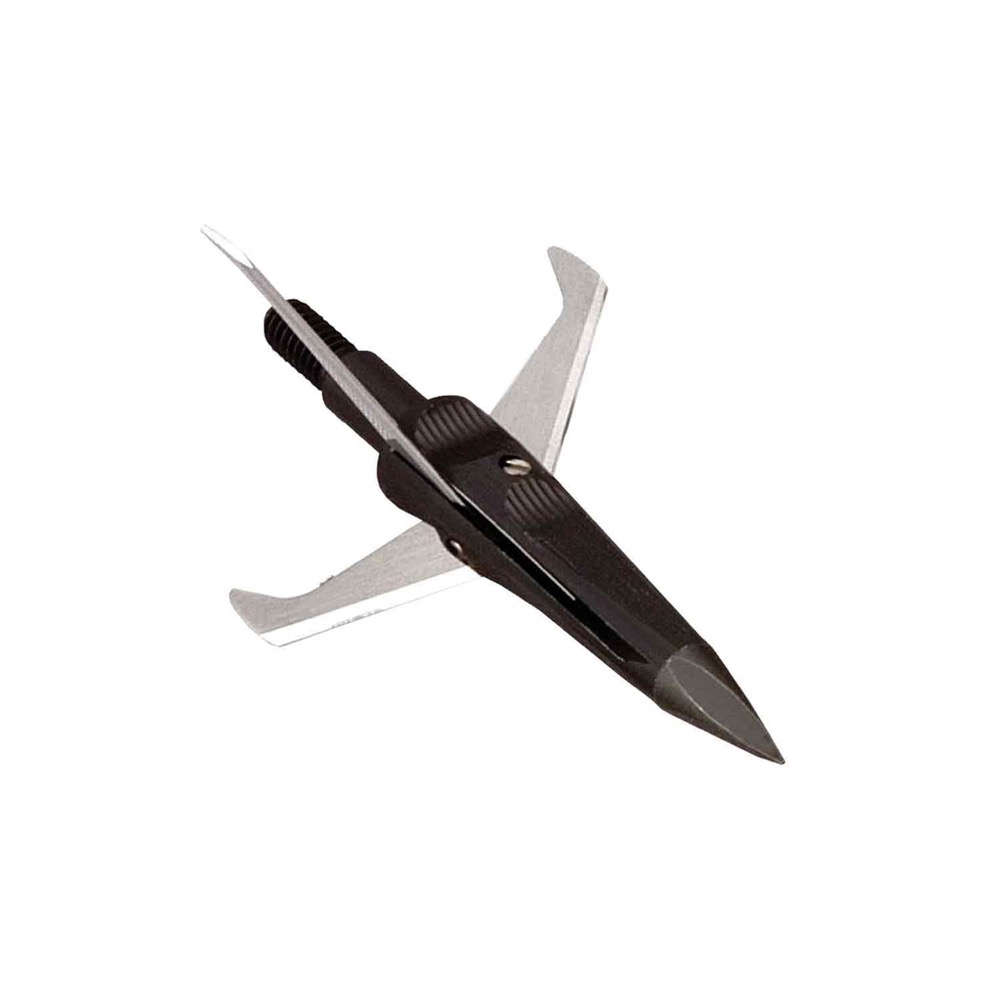
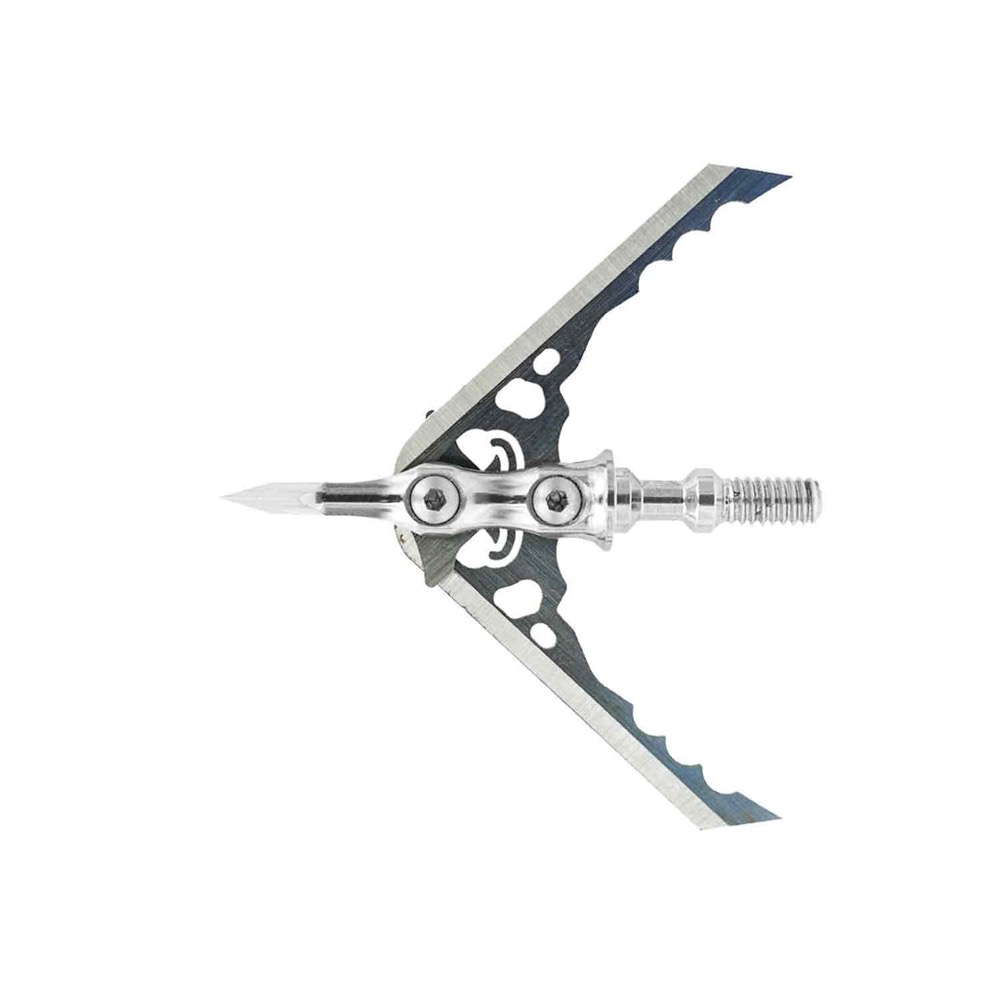
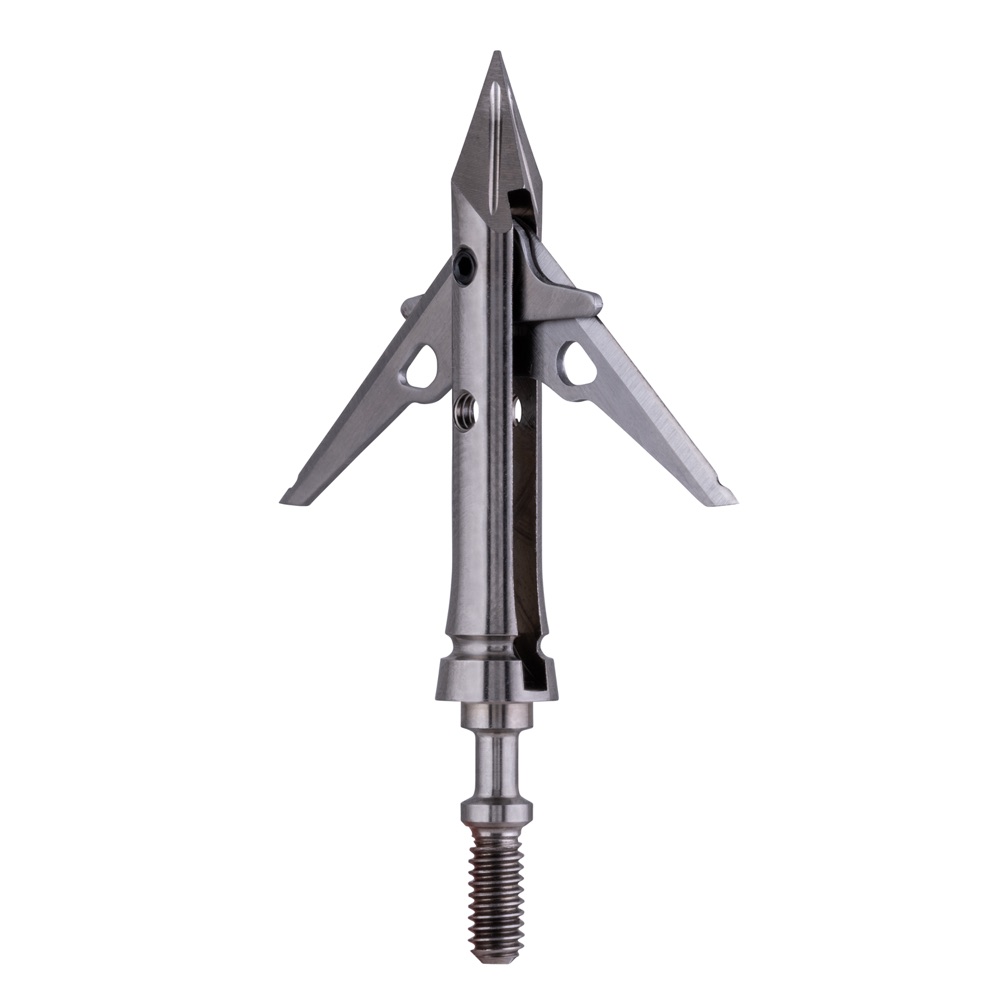
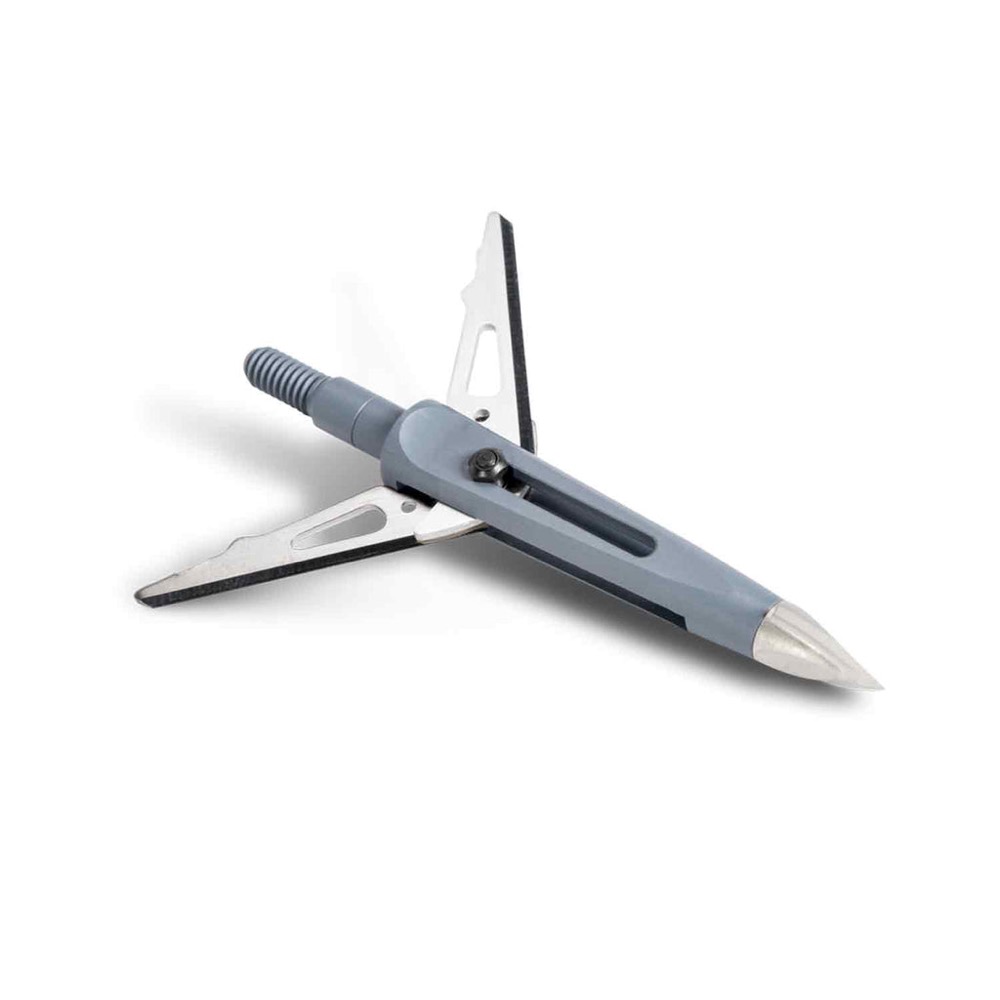
Mechanical Broadhead Review
NAP Killzone Review
A big-cut, low-cost rear-deploy mechanical built for easy blood trails on broadside deer.
How it scored
Scored on our fixed 5-part system — built from the consensus of field reports, video tests and hunter feedback. Each axis is an independent 0–10 score. How we score ↗
What we liked
- Massive 2-inch cut for the price
- Spring-clip rear-deploy resists premature opening
- Easy, well-documented blood trails on broadside hits
- Field-point-like flight at typical deer ranges
- Dedicated crossbow version available
Where it falls short
- Penetration trails other rear-deploy heads of similar weight
- Wide cut demands solid kinetic energy and shot placement
- Standard spring clips aren't built for crossbow KE
- Marginal on quartering or heavy-bone hits
Flight & accuracy
The Killzone flies well for a wide rear-deploy head, with the blades carried over the ferrule in the closed position so the profile stays slim and field-point-like out to normal whitetail ranges. Reviewers consistently report tight groups inside 30 yards with no special tuning beyond a square rest and a well-spined arrow.
Like any 2-inch mechanical, it loses forgiveness as range stretches and arrow speed rises, so it is happiest on a properly tuned setup. Crossbow shooters should run the dedicated Killzone Crossbow version, whose clips and blades are matched to the higher energy a crossbow delivers.
Penetration
Penetration is the recurring knock against the Killzone, and it is an honest one. The 2-inch cut opens a large wound but consumes a lot of energy doing so, and bench-and-field comparisons show it penetrating less than narrower rear-deploy heads at the same arrow weight and speed.
On broadside, rib-only deer with a modern compound putting roughly 50 ft-lbs into the target, it does its job and frequently passes through. Push it into a quartering angle, a shoulder, or a marginal-energy setup near the 40-pound draw floor and the odds of a one-lung hit or a stuck arrow climb quickly. This is a placement-dependent head, not a bone-buster.
Durability & edge retention
The .035-inch black-nickel blades and 7075 aluminum ferrule hold up fine on soft-tissue passes, and most hunters get a clean kill and a reusable ferrule with fresh blades. The black-nickel coating sheds friction and helps the head slip through hide.
Hard contact with heavy bone is where the aluminum ferrule and thin blades show their limits, with bent ferrules and tweaked blades reported on shoulder strikes. Treat it as a soft-tissue specialist and keep spare blades on hand rather than expecting it to survive scapula hits intact.
Blood trail
Blood trail is the Killzone's headline strength. The 2-inch entry and the large internal damage produce easy, well-marked trails, and one long-time user reports more than 20 deer recovered without ever working a hard trail.
When the energy is there to get the head through and out, the dual holes bleed generously and recoveries are short. The caveat is that the same wide cut that bleeds so well is the reason the arrow may not exit on marginal hits, so the best trails come paired with confident, energetic, broadside shots.
Value & who it's for
At around $35 a three-pack, the Killzone is one of the best values in big-cut mechanicals, and that price plus the dramatic wound channel is why it has such a loyal whitetail following.
It is the right head for a hunter with a well-tuned compound or a crossbow (using the dedicated crossbow version) who hunts broadside deer at moderate range and prioritizes blood trails over deep, bone-crushing penetration. Hunters chasing elk, taking steep angles, or running marginal energy should look at a narrower, harder-hitting head.
Specifications
| Brand | NAP |
|---|---|
| Type | Mechanical |
| Cutting diameter | 2.0" |
| Blades | 2 deploying (.035") |
| Grain options | 100gr, 125gr |
| Blade / steel | Black-nickel stainless |
| Ferrule | 7075 aluminum |
| Pack | 3-pack |
| Approx. price | ~$35 / 3-pack |
| Best for | Whitetail, Crossbow |
Specs and pricing are approximate and change frequently — confirm with the retailer before buying.
FAQ
Is the NAP Killzone good for crossbows?
Use the dedicated Killzone Crossbow version. The standard spring clips are tuned for vertical-bow energy and aren't built for the higher kinetic energy of a crossbow, which can cause premature deployment or clip failure.
Why does the NAP Killzone get criticized for penetration?
Its 2-inch cut consumes more energy on impact than narrower heads, so at the same arrow weight and speed it penetrates less than other rear-deploy mechanicals. It rewards solid kinetic energy and broadside placement.
How big is the NAP Killzone's cutting diameter?
The Killzone opens to a full 2.0 inches, which is what drives its easy blood trails and big entry holes on broadside deer.
Sources
Sentiment for this review was aggregated from independent tests, hunting forums and retailer reviews, including: